


| Product Description |
|---|
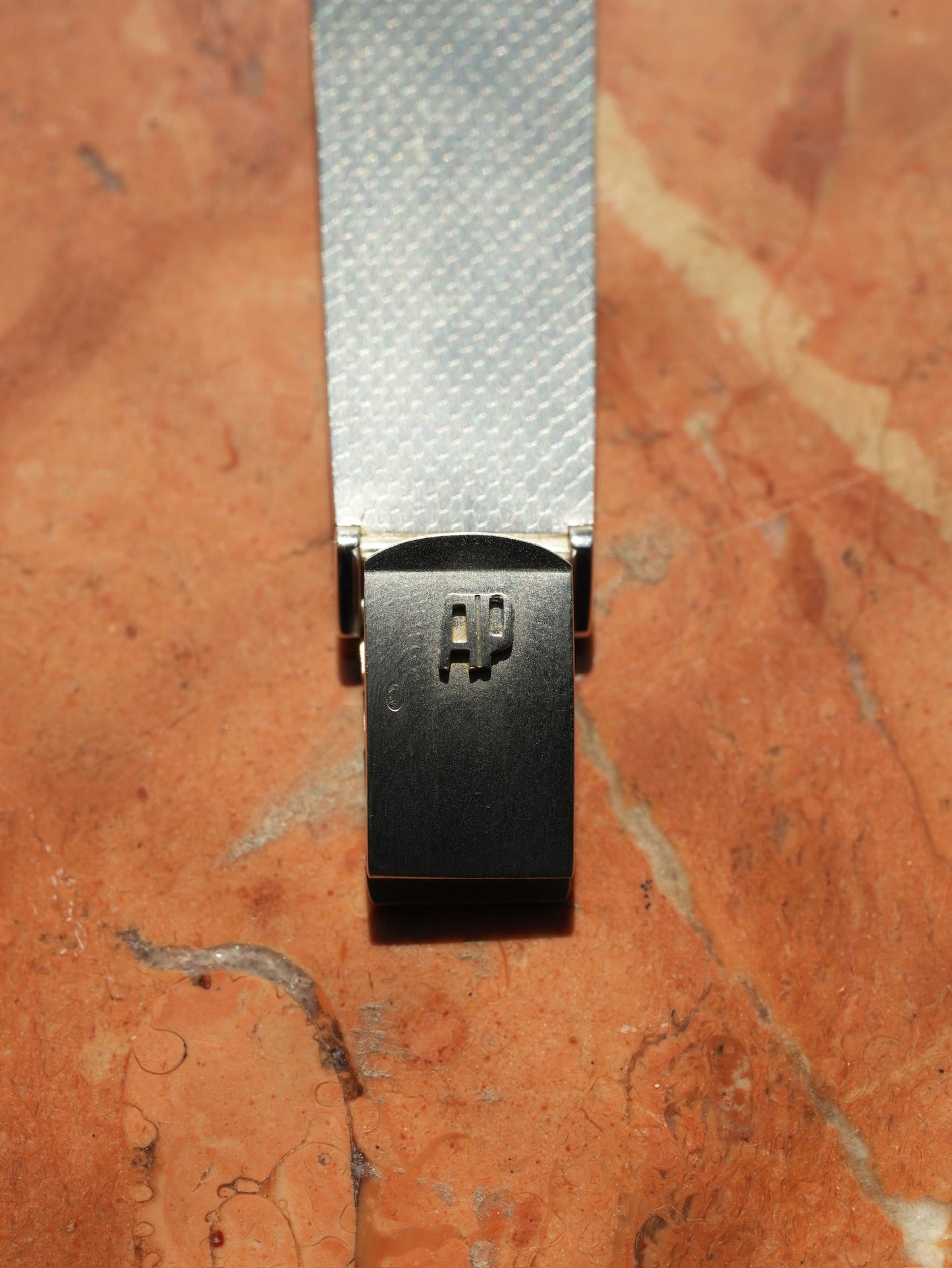
| Before the Royal Oak transformed the identity of Audemars Piguet in 1972, the maison was already experimenting with refined geometric forms within the world of ultra-thin dress watches. This elegant octagonal piece belongs to that important Pre-Royal Oak era, when the brand focused on discreet luxury, precious metals, and exceptional thinness rather than bold sports watch aesthetics. Crafted entirely in 18-carat white gold, the watch features a beautifully proportioned octagonal case. Unlike the sharp, architectural octagon that later defined the Royal Oak, the geometry here is softer and more fluid. The eight sides are gently rounded, creating a subtle yet distinctive silhouette that reflects the refined elegance of high horology during the late 1960s and early 1970s. At that time, Audemars Piguet and a handful of elite Vallée de Joux manufactures explored geometric cases as a modern interpretation of the classic dress watch. The dial follows the same philosophy of restraint. With its minimalist two-hand layout, slender baton indices, and the discreet Audemars Piguet Genève signature, the design achieves perfect balance without unnecessary decoration. The purity of the dial allows the proportions of the case to take center stage, highlighting the quiet sophistication that defined the finest dress watches of the period. Powering the watch is a manual-winding movement, consistent with Audemars Piguet’s long pursuit of ultra-thin watchmaking. Throughout the mid-twentieth century, the brand produced some of the thinnest mechanical movements ever made, allowing watches like this to maintain an exceptionally slim and elegant profile on the wrist. Viewed through the lens of watchmaking history, this piece captures the essence of Pre-Royal Oak Audemars Piguet — refined geometry, precious materials, and understated sophistication, just before the Royal Oak would redefine modern watch design. 18.5cm wrist |
- 選択結果を選ぶと、ページが全面的に更新されます。
- 新しいウィンドウで開きます。